

A BRIEF REPORT ON SPECIAL TISTA TOUR OF CHICHIBU DISTILLERY, SAITAMA PREFECTURE
Article for TisTa Cultivator version 1.4.
Chen Lim
Chichibu Distillery by Venture Whisky Inc. needs little introduction. Since its founding in 2004, with production beginning in 2008, and the launch of its whiskies three years later in 2011, it has developed a cult following throughout the world, quick to be snapped up and commanding premium prices for its releases. Long a follower of Chichibu’s since the release of Ichiro’s Malt (world blend), my first opportunity to visit this fabled distillery was at the invitation of TisTa’s President Tsuji Yoshihiko-san over Christmas. Indeed, what a delicious Christmas present it was for me! The deliciousness certainly lingered and I returned once more with a group of Chichibu fans from Singapore a few months later.
Located in the low hills across the Arakawa River, northwest of its namesake Chichibu City, Saitama Prefecture. Nested amongst the hilly Midorigaoka industrial park, Chichibu consist of two facilities, Daiichi (plant no.1) the original distillery since 2004, and the newer Daini (plant no.2) about half a kilometer down the road. A woodfired stove welcomed us at the Daiichi reception and office housed in a well lived-in timber cabin house. Accolades and awards lined the walls of the interior, prominent are multiple framed acrylic plaques from the World Whiskies Awards, along with whisky memorabilia from the distillery. More interesting is a back wall shelved with hundreds of bottles of distillery samples, blender’s projects and new makes. The log cabin reception also doubles as the distilleries tasting room for the occasional guests. Following the greetings and introductions, our guide for the day the youthful Watanabe Masashi-san (渡部 正志) led us out and we began our journey at the mill room located next to the reception cabin.
At a glance, Chichibu Daiichi is a spartan and compact affair, the entirety of their production process (save for malting and maturation) is housed within a single corrugated steel hanger. The mill room is equipped with an Alan Ruddock (UK) AR2000 belt driven four-roll mill that typically has a milling capacity of two tons per hour. Chichibu is experimental in nature, and employs imported Scottish, English, German, Australian malting from the big houses in UK (Crisp), Japan (Suntory Malting), and Germany (Durst) as well as sourcing local barley. Some of the local barley strains employed are Myogi nijyo, Sai no honshi, and Golden Melon from the neighboring township of Kanno. One interesting grain Chichibu employs is Chevalier non-peated barley, which dominated the English crop in the late 19th century and fell out of favor by the First World War. They also utilize a heavily peated Laureate. Chichibu is also currently conducting their own maltings and have installed a malting floor but more on that later.
Next up is the mashing and fermentation stations, and together with the pair of pot-stills are housed in a same open format hanger. A single mash tun of 2,400 L capacity is the workhorse producing 2,000 L of wort, feeding the first and second washes into eight Mizunara oak (Quercus mongolica var. crispula) washbacks each of 3,000 L mounted on steel I-beams, with the third wash is retained for the next mashing. This is the core of Chichibu’s famed lactic acid experiment, and widely reported to be the only distillery in the world utilizing this difficult oak for washbacks. The first generation of washbacks were in service for over 16 years, and since 2023 are being replaced by the current second generation of washbacks. Fermentation depending on the mash is between 60-120 hours in length, with a shorter duration in the summer and a lengthier period during the winter months. Presently Chichibu maintains Scotch-style whisky traditions and utilizes only a single type of standard Distiller’s Yeast from Scotland.
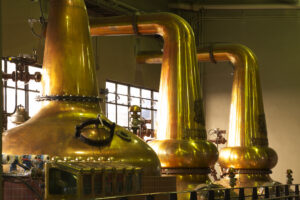
The pair of small onion shaped copper pot stills of 2,000 L capacity each are elevated upon a steel framed mezzanine. Manufactured by Forsyths of Rothes Scotland the stills are indirect gas fired steam heated with short descending lyne arms at 12 º into vertical shell and tube condensers. Distillation occurs over two days for six hours each. 2,000 L of wort produces 700 L of low wine at 23 % abv and typically the hearts are cut at about close to 70 % abv.
Total production capacity at Daiichi is only 55,000 L per year, hence the high demand for its modest runs. As a petit Chichibu staff member squeezed himself out of the pothole, we were fortunate to catch the cleaning of the wash still, providing a rare peak into the steam heating coils within the body. Watanabe-san demonstrated the differences with a variety of New Make cut points. Regrettably, being a New Make Junkie, I lament not having the opportunity to sample the new makes there and then, but from the nosing of the aromas alone, it is quite remarkable how a few minutes or even seconds differs and alters the profile. There are detectable aroma variations from the cuts which occurred between the timings 8:18 and 8:19 (1 minute), and 8:30 (11-12 minutes), 8:41 (23 minutes) and 9:47 (over an hour), clearly illustrating the decision making for the cut points are truly an art form determined by the master distiller.
Across from the production floor is Daiichi’s maturation warehouse. Albeit the structural cladding and roofing are modern corrugated mild steel, the interior is a traditional dunnage warehouse racking on four tiers with clay dirt flooring. Chichibu is a pioneer and continues to lead the way in cask experimentations. The range of cask types are impressive from Chibidaru custom quarter casks, Mizunara wood, Cognac, Rum, IPA, Porter, red wine, white wine, sparkling wine, to Umeshu (plum wine). Chichibu sources their casks globally from a variety of sources. Looking through the dunnage reveal whiskey barrels from Four Roses Bourbon Kentucky, Jim Beam and Heaven’s Hill, wine casks from Chateau Gruaud Larose by Tonnellerie Baron, and rum casks from Barbados. In total there are some 27,000 casks in maturation over seven warehouses (nos. 1-6 are dunnage style, and no. 7 racked style) spread between Daiichi and Daini. The oldest cask in maturation is from 2008 their first year of production, while the oldest cask in Venture Whisky’s collection is a 1985 Hanyu cask. Winter temperature drops to -10 ℃ with occasional snow and up to 38 ℃ in a rather humid summer, giving on average a 5 % angel’s share evaporation rate.
Chichibu has its own on-site cooperage, making it one of the five operating cooperages in Japan, repairing and manufacturing their own stock of barrels and casks. Every stage from drying the timber, cutting the staves, charring and toasting of the casks are competently done in-house. The distillery acquired the equipment from Maruesu Cooperage in Hanyu (yes the same town as the famous ghost Hanyu Distillery) when the master copper went into retirement in 2013. The special feature of Chichibu’s cooperage is the production of about 250 Mizunara casks per year. Mizunara are prized by both furniture makers and whisky producers. For the latter the wood adds complexities during the maturation process and provides the flavors and aromas of sandalwood incense and coconuts. Chichibu’s Mizunara are largely sourced from Hokkaido at the timber auction in Asahikawa. The cooperage team consists of four staff members, and incidentally our guide Watanabe-san is one of Chichibu’s in-house expert coopers. Chichibu has its own bottling plant on site producing 5,000 bottles a day.
Our final stop is Daiichi Chichibu’s malting house, similar with the other architecture on site, is unassuming and easy to walk by thinking it’s just another storage facility. A two-storey structure with the malting floor on the ground level and the stainless-steel malting tank situated on the second floor. Experimental malting began in-house over fifteen years ago in 2011 and by 2015 malting was done at scale, today producing about 20-30 % of the distillery’s needs with floor malting conducted once every two months. Golden Melon barley strain grown locally in Saitama Prefecture are employed. In Japan peat is more abundant in the north such as Hokkaido, and is more limited elsewhere, but that has not stopped the ever-innovative Chichibu from experimenting with local peat. The whiskies produced from their own malting are typically released as ‘limited release’ identified under ‘Floor Malted’ suffixes.
Concluding the tour of Daiichi plant, a hop onto our hired bus and short ride brought us to Daini distillery plant half a kilometer down the road. Sprawled over a 15,000 m2 plot, Daini began operations in 2019. Beyond the stylish black wrought iron gate crafted with decorated ears of barley and pot stills, the all-black modern hangers cried out its contemporary aesthetic. The first building that greeted us was a massive multi-storied maturation warehouse equipped with industrial racking eight levels high. This is warehouse no. 7, Chichibu’s first mechanical racked warehouse and newest addition opened in 2021 and has a capacity for some 18,000 barrels. The casks are retrieved by a battery powered Toyota Reach FBR20 racking lift truck. Neighboring this behemoth is warehouse no. 6, a smaller traditional dunnage.
Inside the production building, the new facility is designed like science laboratory, large clear glass windows separating the mill room with the laminated floor corridors. The mill room is on a different scale to the first plant, where grains are sieved and sorted by hand, and here a large Buhler destoner is in play, along with the same Alan Ruddock AR2000 belt driven four-roll mill, and of course the barley are now in the huge 1 ton bags sitting on rows of plastic pallets, compared to the human-size 25 kg packets used at Daiichi. Extending over two levels, Daini feels more like a small to mid-size distillery found in Speyside. Gone are the days of precariously hovering on step ladders to peer into the fermentation tanks. On the second storey is access to a single stainless steel and copper mash tun at 10,000 L equipped with a semi-lauter, capable of mashing 2 tons malt per batch.
Instead of the famed Mizunara washbacks of its sister plant, Daini is equipped with eight 10,000 L French oak (Quercus robur) washbacks, ostensibly for the encouragement of lactic acid. French oak has tighter grain compared to Douglas fir or Oregon pine (Pseudotsuga menziesii), with lower tannins that helps with sustaining lactic acid bacteria growth after the initial yeasting fermentation phase, and is believed to impart a more fruitier and lightly spiced notes. Certainly at least for this author, who attributes the Mizunara washbacks and their long fermentation period of up to 5 days (120 hours) in creating the underlying tropical fruits (think pineapples, fermented mangoes, and sub-tropical kiwis) undertones so characteristically found in the range of Chichibu whiskies. Hence what new flavors will the French oak bestow?
Similar to Daiichi, Daini operates on a pair of Forsyths pot stills, with the very same onion shape, and even the angle of the downward lyne arms at 12 º. The only major difference is these stills are now upsized, with a 10,000 L capacity for the wash still, and 7,000 L for the spirit still. Another major and perhaps crucial departure from their Daiichi’s smaller cousins, are this pair are gas fired direct heating, with the intention of recreating old school style whiskies where direct fire was in play. In the background of the still room, large window panels set the pot stills against the vista of the countryside.
Production capacity at Daini is about 260,000 L per year on a single shift, five times more than the original Daiichi plant, hence if Chichibu with its two plants were to go full-steam and run 24/7 like many of the Scottish distilleries, some 1,200,000 L of spirits can be produced a year! Still, I suspect in line with the company’s grounded philosophy of quality in unison with quantity, we are unlikely to see such volume being churned out. Compared to Daiichi with 10-12 staff members where almost every stage of processes is executed by hand, Daini being largely automated employs only six people to operate the large facility, and during our visit they can be found behind their desks in a spacious control room overlooking the two pot stills.
Back in the timber cabin reception and tasting room at Daiichi, aside from the usual Chichibu line-ups, the group was treated to not-released samples and experimental whiskies. Here are some of the author’s highlights:
Ichiro’s Malt Chichibu No. 2646 15 YO 59 % abv
Sampling drawn 6 January 2025 cask in 2010, 1st fill American oak Sherry hogshead
– A fino cask with fresh grapes, fermented pressed grapes, underlying sweet and sour tones, milk chocolates with a springy finish.
Ichiro’s Malt Chichibu No. 14163 9 YO 59 % abv
Sampling drawn 23 September 2025 cask in 2016, 1st fill American oak IPA beer barrel
– Rich malt character, mandarin orange peels, musty, deep long finish with some light peat.
New Make Distillery No. 1 (Daiichi) 63.5 % abv
Distilled 29 November 2023 Amidala non-peated
– Sweetened barley cake, malt candy, and quality luxury chocolates.
New Make Distillery No. 2 (Daini) 63 % abv
Distilled 14 June 2025 Laureate medium peated (Crisp)
– Darker and stronger, fresh fruits and cooked barley porridge.
Ichiro’s Malt Chichibu Private Cask CC2939 3 YO 61 % abv
Sampling drawn 4 October 2025, 1st fill Sherry European oak puncheon
– Sultanas with long lingering white pepper finish.
Ichiro’s Malt Chichibu II NAS 55 % abv
Distillery No. 2 (Daini) official bottling released March 2025, principally ex-Bourbon with vatting of other casks
– Very rounded whisky, earthy and lightly smoked, less tropical fruits sourness and more sweet orchard fruits with some bitter chocolates ending.
The contrast between Daiichi and Daini cannot be more dramatic. The original Daiichi plant, a no-frills warehouse hanger demonstrates and articulates the labor of love. Chichibu is after all the very first whisky distillery to be established since the burst of the bubble years in 1980s and 1990s. Its functional and experimental to the core. One cannot help feel the somewhat mom and pop origins, the neighborhood underdogs doing what needs to be done to produce whisky never been seen for the last half century, and what a whisky they produced, delighting audiences and fans worldwide without fail.
Daini represents the fruits of the struggles sowed two decades ago, an ultra-modern, upscaled, top-of-the-line distillery with demarcated purpose-built production areas and is now taking the world head-on. Contrast that with the wobbly aluminum step ladders the staff of Daiichi drags around to clammer to the top of the washbacks, running rubber hoses to the various tanks, and basically running a co-working space and pooling resources. With the newish Daini plant’s increased capacity, Venture Whisky seeks to focus its production to stabilize its core releases and have the original Daiichi distillery devoted to experiments. Coupled with their latest Grain Tomakomai Distillery venture in Hokkaido, one wonders what new tricks Chichibu have up their sleeves, and how different their blended, single malt and future 100 % grain expressions will be in the upcoming years? Will they be able to keep up with surprises after surprises, expressions after expressions that are feverishly sought after? Will Chichibu be able to keep their consistency and renowned quality with all the upscaling? There is one final element and perhaps the most important variable which Chichibu possesses as their secret weapon – their people – the people who poured everything into making something they believe in – with such a weapon, the future of Chichibu remains a shining star and very bright indeed.
* * * * * *
Important Note
Readers are to note that Chichibu distillery is not open to the public, and presently does not run a distillery tour or visitation program. The above distillery tour was catered for members and guests of TisTa.
Acknowledgement
The author wishes to record his sincere thanks and appreciation to Ms. Yoshikawa Yumi, Venture Whisky Global Brand Ambassador, and Mr. Watanabe Masashi our expert guide for sharing their time and passion on the joy of whisky making.
About the Author
Chen Lim is a retired anthropologist who found second life as a whisky pilgrim, traveling the world visiting distilleries, learning about, and drinking the water of life. He is the Honorary Global Ambassador of TisTa Co.
About TisTa
TisTa, a media platform dedicated to whisky, seeks to promote Japanese whisky craftsmanship philosophy to the world. TisTA organizes whisky tasting, seminars, and distillery visits multiple times a year for its members.
Disclosure statement
The views expressed in this article represent the personal views of the author and are not necessary the views of TisTa Co. or the distillery visited. All expenses incurred for the visit are borne by the author, no funding was received from the stated distillery, representative companies or external entities.
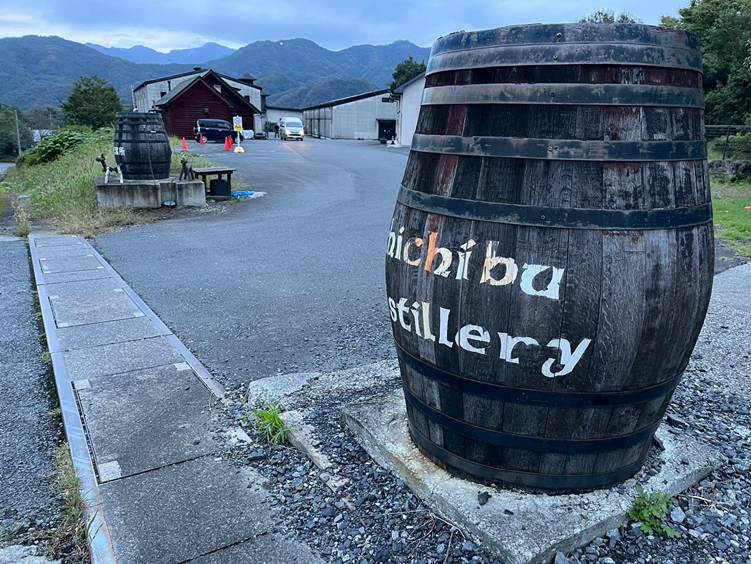
1. The fabled Venture Whisky Chichibu Distillery in Saitama Prefecture (Chen Lim).
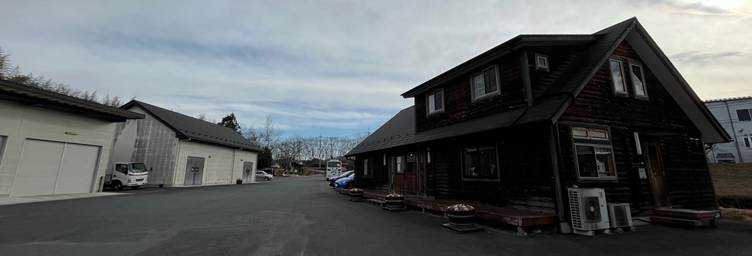
2. Chichibu’s timber cabin-style reception and office (right), and the floor malting hall (center-left) (Chen Lim).
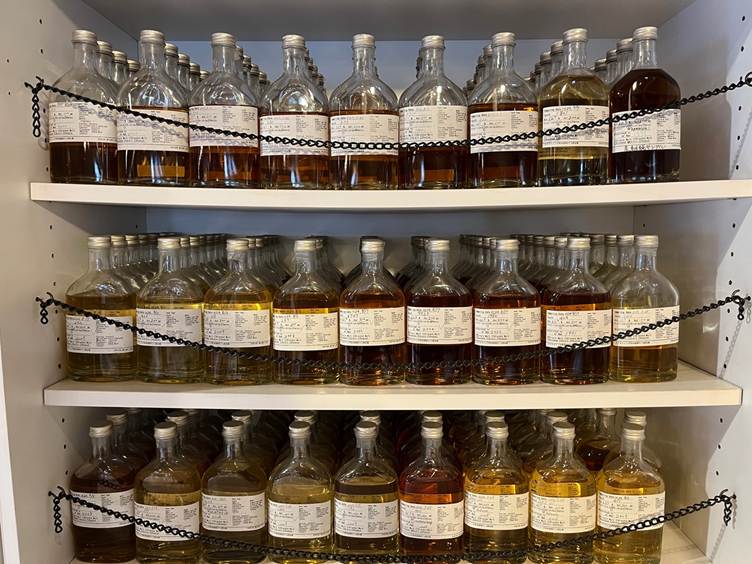
3. Bottles upon bottles of samples tempting the whisky pilgrim (Chen Lim).
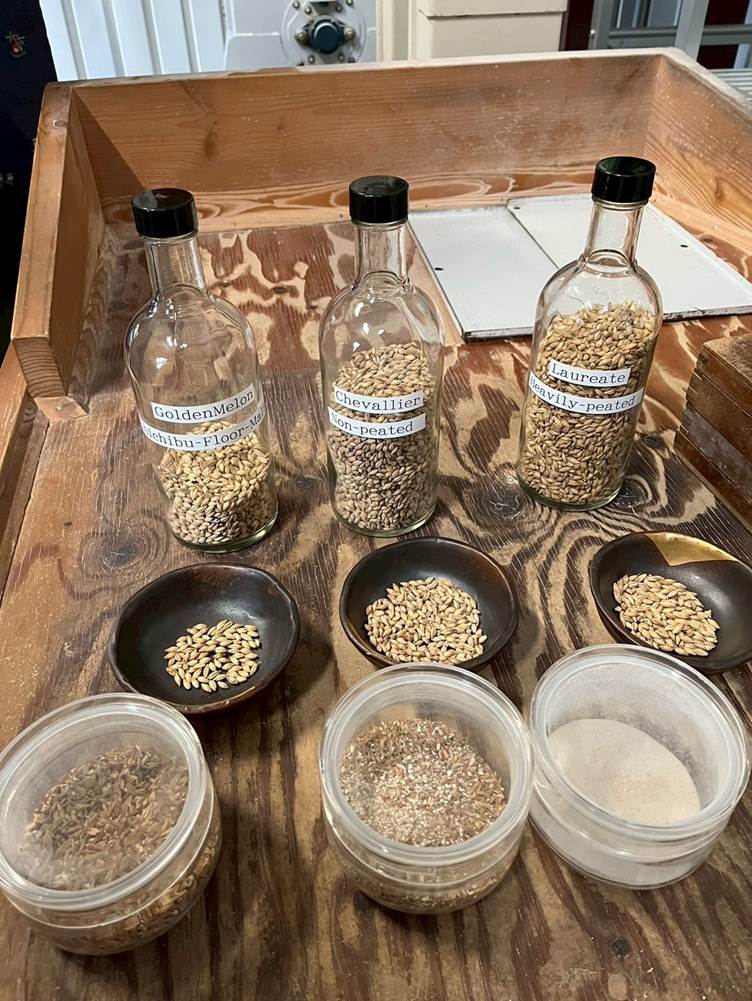
4. A small sample of malts employed by Chichibu (Chen Lim).
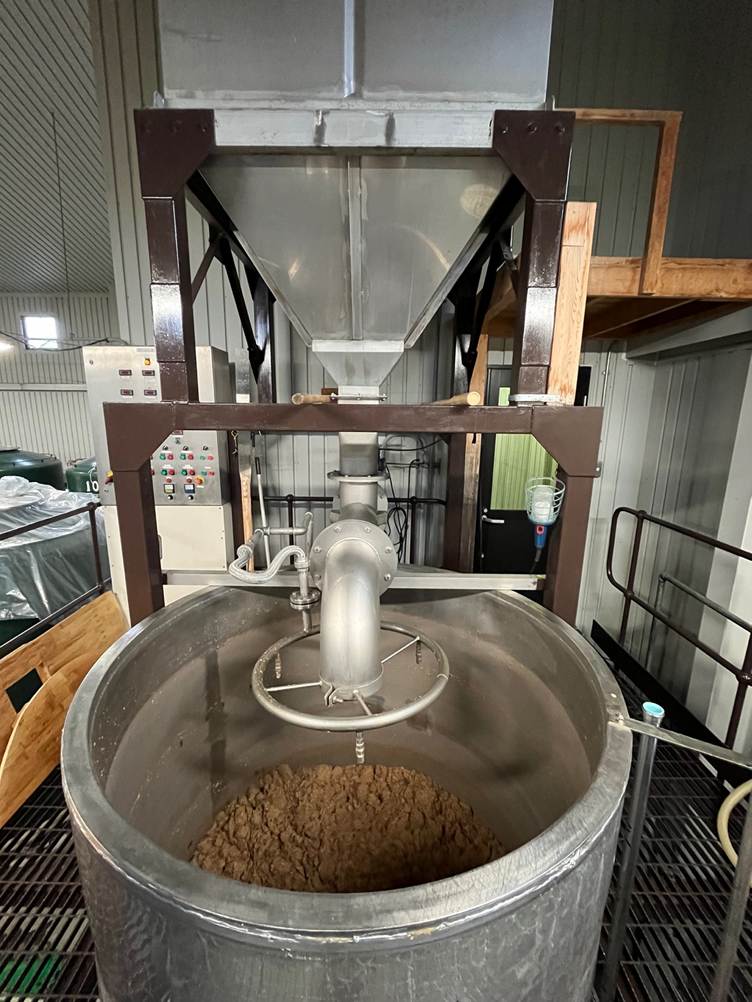
5. Daiichi’s stainless steel 2,700 L mash tun being fed by the mixer (Chen Lim).
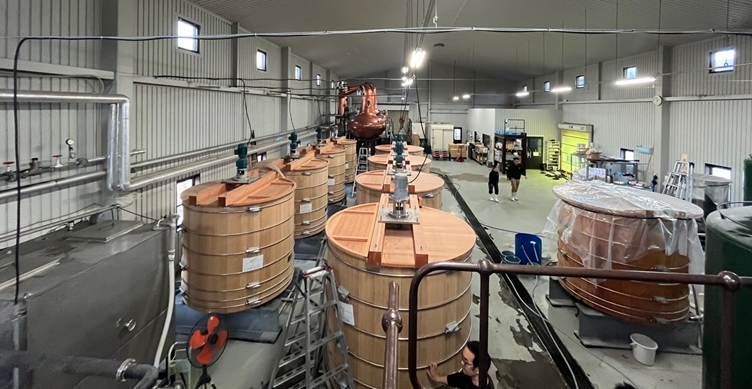
6. Chichibu Daiichi is open format with all the principal stages of whisky production in one spacious hanger (Chen Lim).
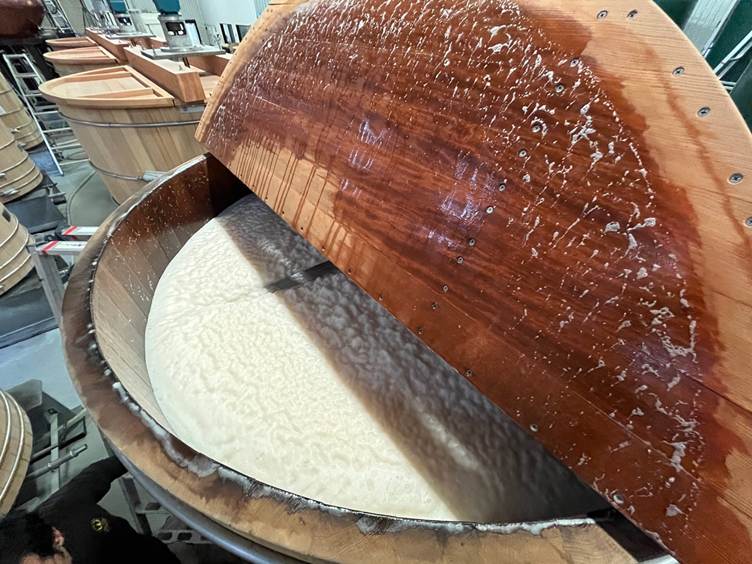
7. Pioneering use of Mizunara washbacks, certainly the world’s first distillery to employ them (Chen Lim).
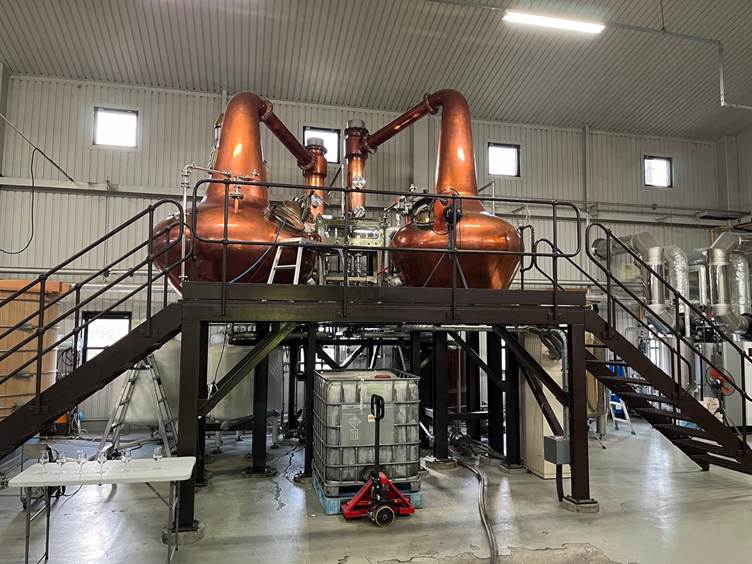
8. Daiichi’s pair of small onion shaped copper pot stills of 2,000 L each (Chen Lim).
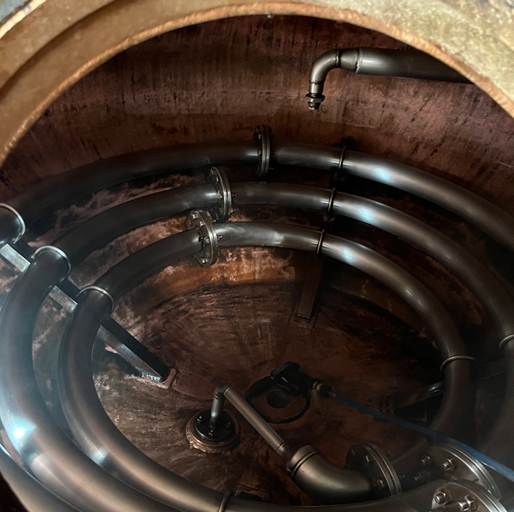
9. Interior heating coils of the wash still (Chen Lim).
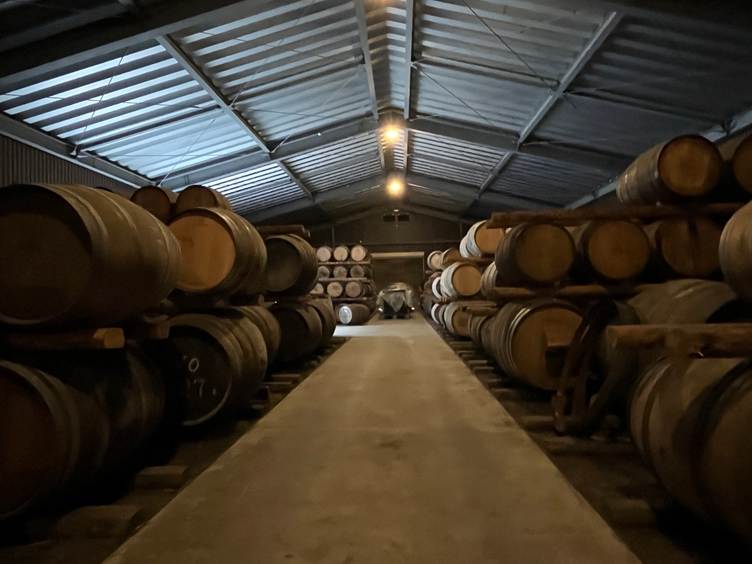
10. One of Chichibu’s seven maturation warehouse in dunnage style (Chen Lim).
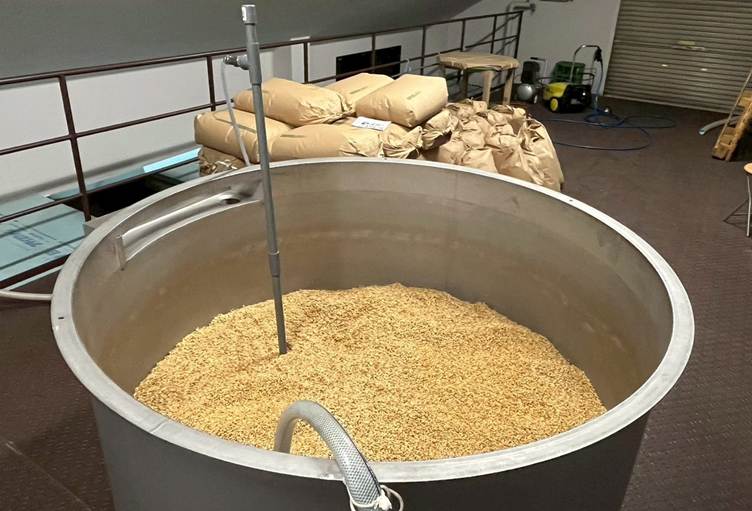
11. Malting tank in the malting house (Chen Lim).
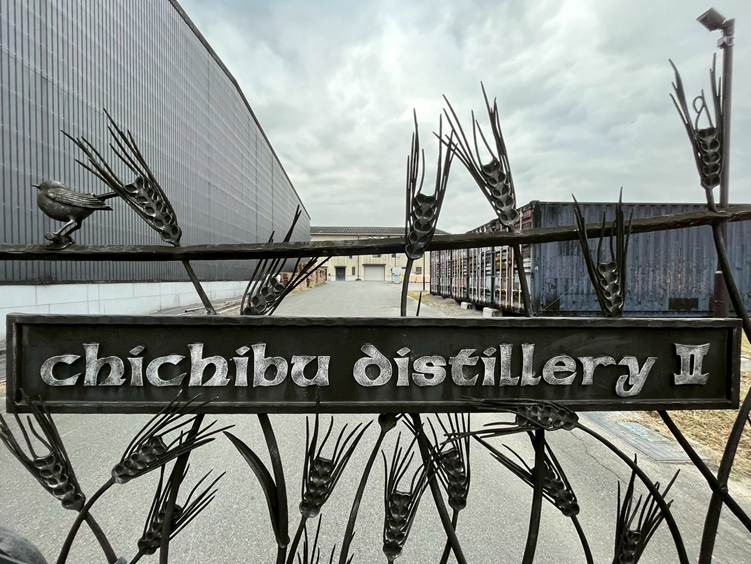
12. Wrought iron gate of Daini distillery (Chen Lim).
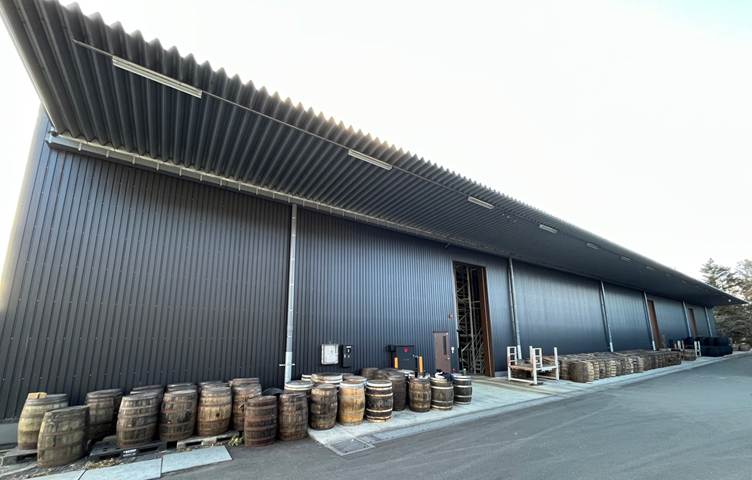
13. Warehouse No. 7 at Daini (Chen Lim).
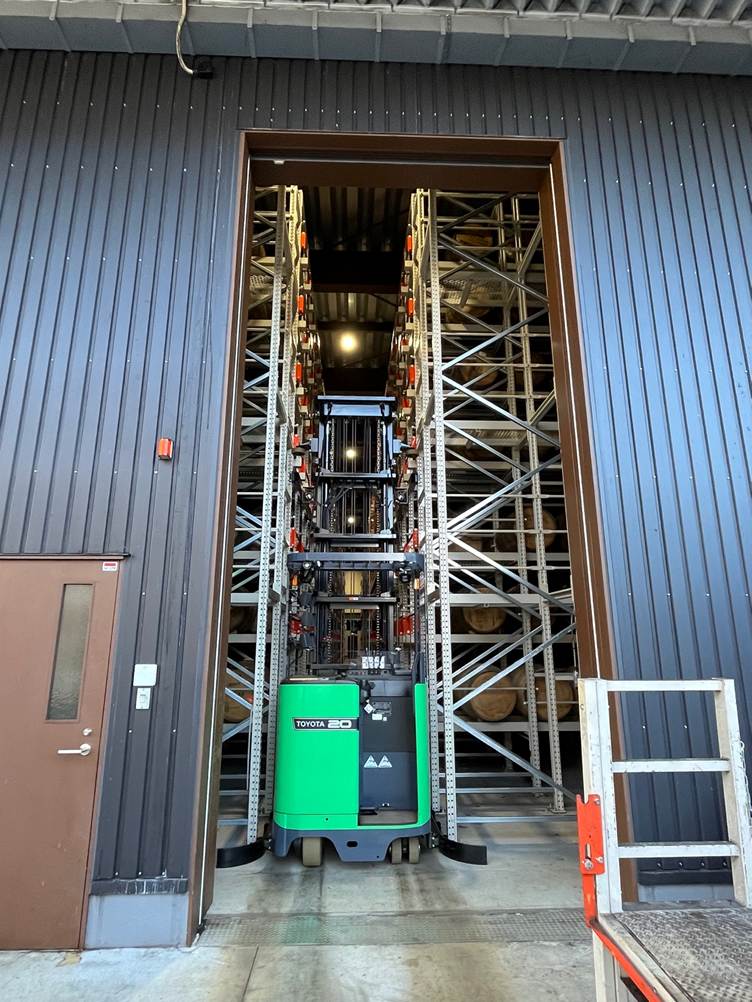
14. Warehouse No. 7 is the only mechanical racked maturation facility (Chen Lim).
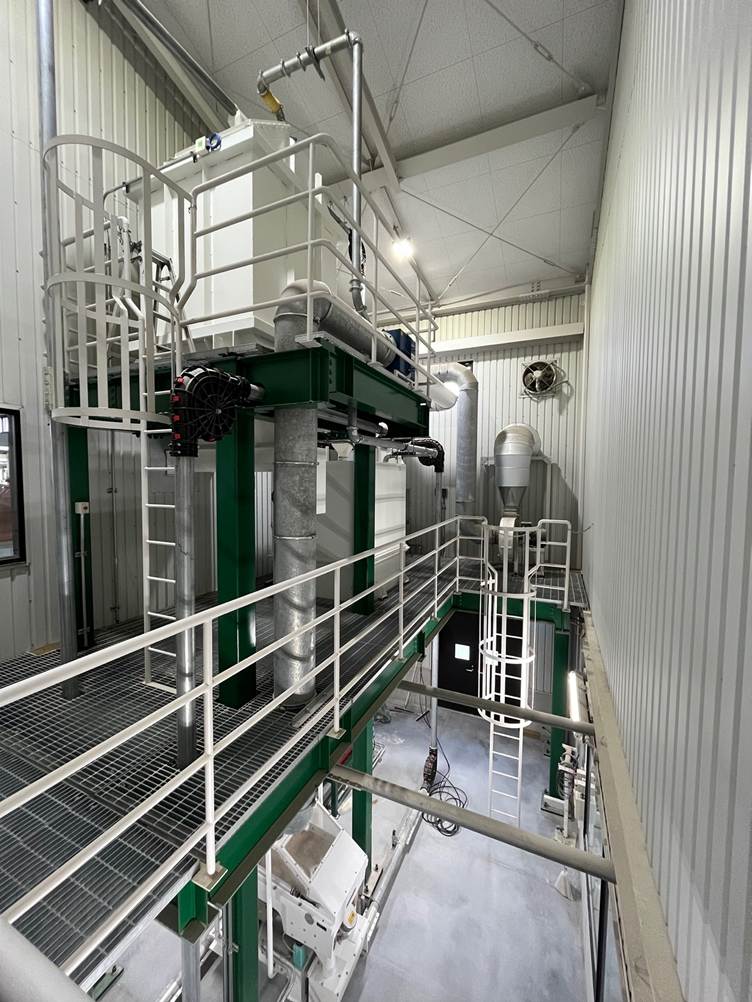
15. Daini’s milling room’s grain silo and hopper (Chen Lim).
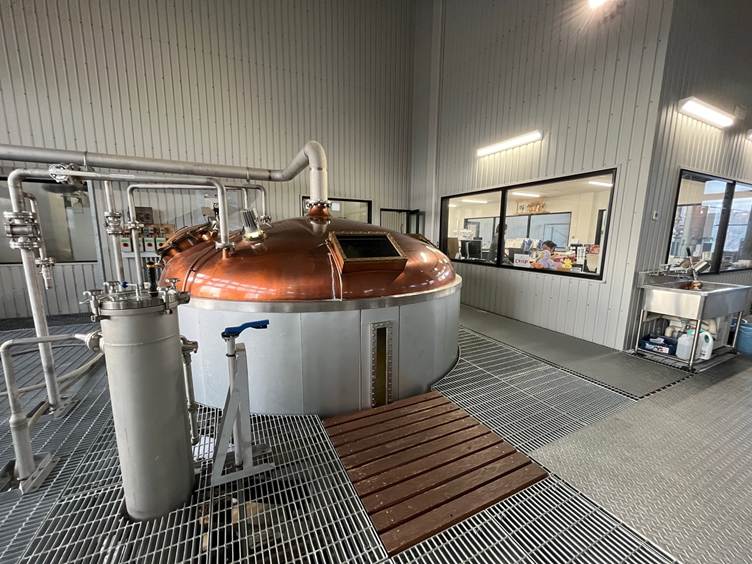
16. Mash tun with 10,000 L capacity equipped with a semi-lauter (Chen Lim).
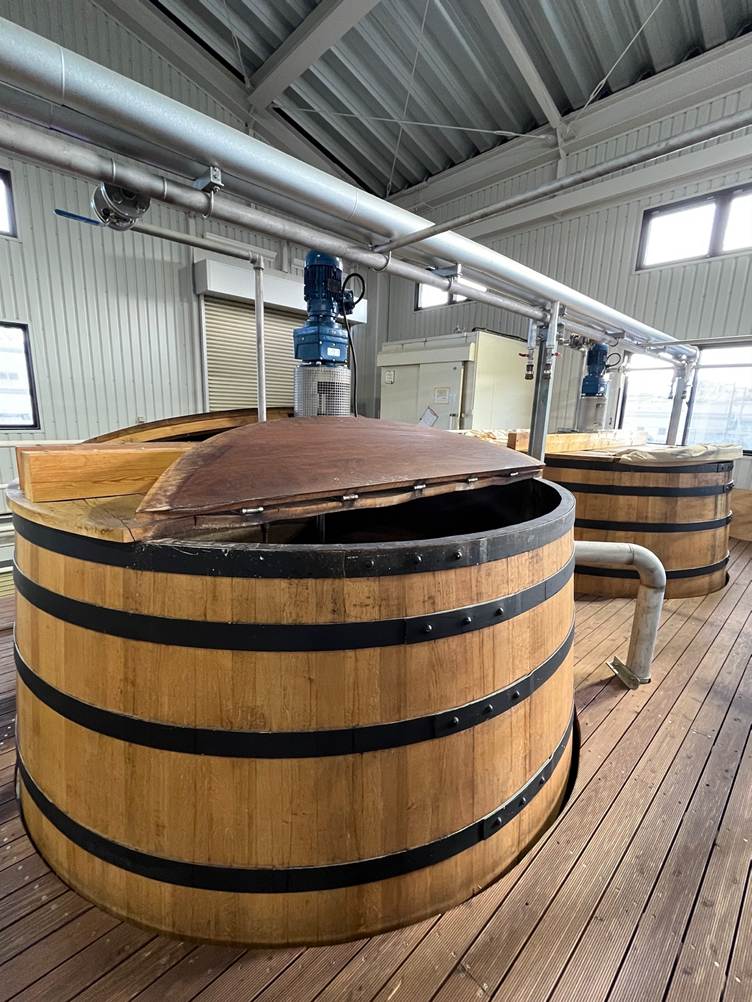
17. Eight 10,000 L French oak washbacks in Daini (Chen Lim).
18. The still room with a grand vista of the Chichibu countryside (Chen Lim).
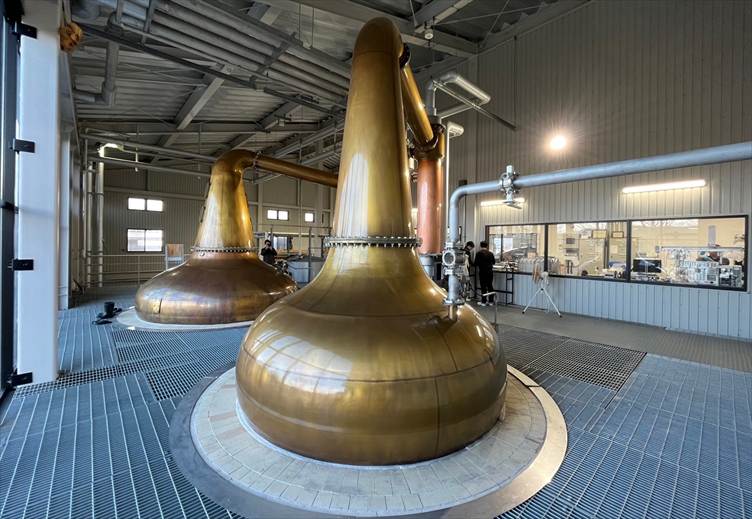
19. Ultra-modern control room facilities overseeing the 10,000 L wash still (rear) and 7,000 L spirit still (front) (Chen Lim).
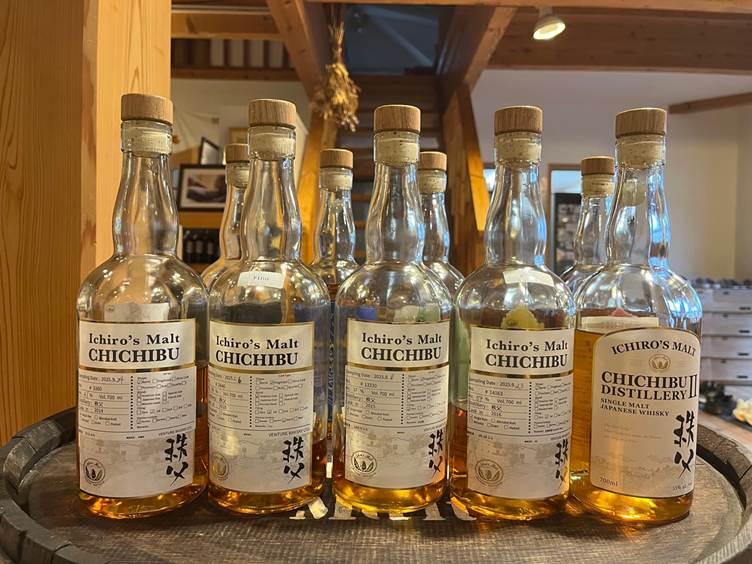
20. Selection of unreleased distillery experimentations, and the inaugural bottling of Chichibu Distillery II (extreme right) (Chen Lim).
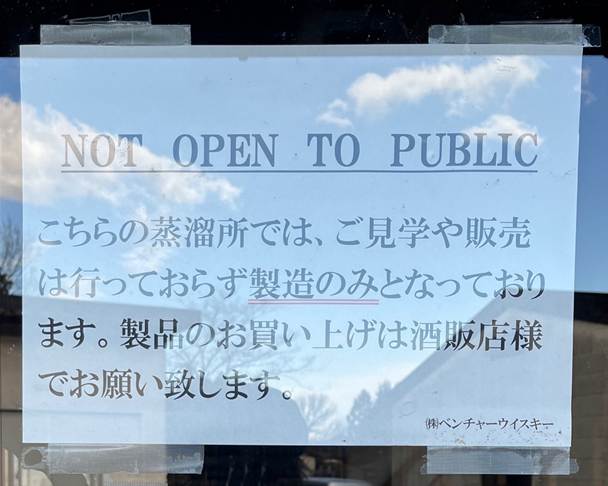
21. Be advised Chichibu is not open to public (Chen Lim).
コメント